

"There can be no military solution to the conflict," the International Contact Group for the Great Lakes (ICG) declared in a blunt joint statement issued on March 5, 2026.
The statement, released by the United States, the European Union and eight European nations, signaled a sharp shift in Western policy toward Rwanda following the collapse of the Washington Accords aimed at stabilising eastern Democratic Republic of the Congo (DRC).
Diplomatic pressure has now given way to a coordinated strategy to restrict the financial and political mobility of Rwanda’s military leadership, whom Western governments accuse of supporting the M23 rebel movement operating in eastern Congo.
The shift from Washington and Brussels follows what the ICG described as a series of serious violations in eastern DRC, where the Rwandan-backed M23 rebels—allegedly supported by advanced Rwanda Defence Force (RDF) hardware—have continued military operations despite the peace framework signed in late 2025.
According to the group, the deployment of lethal drone technology and GPS jamming equipment in the conflict zone represents a major escalation.
"The ICG expresses its profound concern regarding the continued and recent violations in eastern DRC," the statement said.
"Such violations include the use of drones in military attacks which also pose an acute risk to civilian populations. All parties involved should urgently and unequivocally recommit to ceasing the hostilities and return to negotiations."
Following the multilateral condemnation, U.S. Secretary of State Marco Rubio announced a new visa restriction policy on March 6 targeting senior officials accused of directing cross-border operations in eastern Congo.
The restrictions make those individuals—and potentially their immediate family members—ineligible to enter the United States under provisions used when an individual’s presence is deemed to have “serious adverse foreign policy consequences.”
"By continuing to support M23 and violating the Washington Accords, these individuals are driving violence and undermining the stability of the entire Great Lakes Region," Rubio said.
"Individuals believed to be responsible for, complicit in, or directly or indirectly engaged in undermining or impeding a sustainable peace… will face consequences."
The visa restrictions follow economic sanctions imposed earlier in the week by the U.S. Treasury Department against the Rwanda Defence Force as an institution.
The measures effectively blacklist the RDF from the global financial system and freeze assets linked to senior commanders.
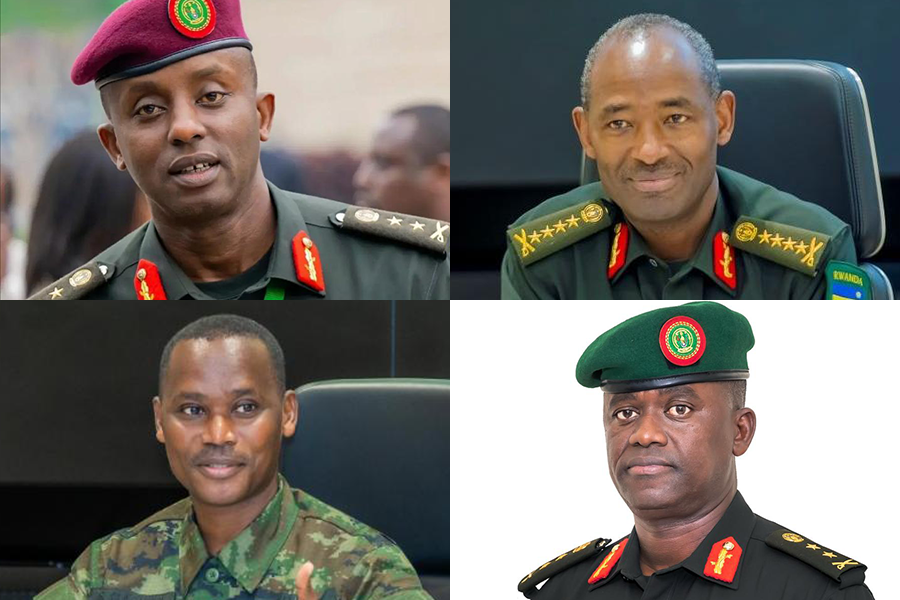
Among those targeted are Chief of Defence Staff General Mubarakh Muganga, Army Chief of Staff Major General Vincent Nyakarundi, and Special Operations Commander Brigadier General Stanislas Gashugi.
By combining financial sanctions with travel bans, Western governments appear to be applying pressure directly on Rwanda’s military command structure in an effort to force a strategic shift.
Diplomats involved in the process say the message from Washington and its allies is that regional stability and international engagement will depend on Rwanda withdrawing its forces and military support from eastern Congo.
The sanctions mark the most direct Western action yet against Rwanda’s security leadership since the resurgence of the M23 rebellion, and signal that patience with the use of proxy forces in the conflict may be running out.
